
Health Insurance Deductible vs Copay: How Your Out-of-Pocket Costs Really Work
Kicking off with Health Insurance Deductible vs Copay: How Your Out-of-Pocket Costs Really Work, this opening paragraph is designed to captivate and engage the readers, providing a glimpse into the intricate workings of health insurance deductibles and copays.
Moving forward, we delve into the specifics of deductibles, copays, and how they intertwine to impact your out-of-pocket healthcare expenses.
When it comes to health insurance, understanding how the deductible works is crucial in determining your out-of-pocket costs. The deductible is the amount you must pay out of pocket for covered services before your insurance kicks in to cover the rest.
The deductible amount you choose will impact your monthly premiums. In general, plans with lower deductibles tend to have higher monthly premiums, while plans with higher deductibles have lower monthly premiums. It’s important to strike a balance between the deductible amount you can afford to pay upfront and the monthly premium you can comfortably budget for.
In health insurance, a copay is a fixed amount that you pay for covered healthcare services at the time of receiving the service. It is a set fee that helps offset the overall cost of the service and is typically Artikeld in your insurance plan.Copays can vary depending on the type of service you receive.
Here are some typical copay amounts for common healthcare services:
Copays differ from coinsurance in that copays are a fixed amount you pay for a service, while coinsurance is a percentage of the cost of the service that you are responsible for. Understanding the difference between copays and coinsurance can help you better manage your out-of-pocket healthcare costs.
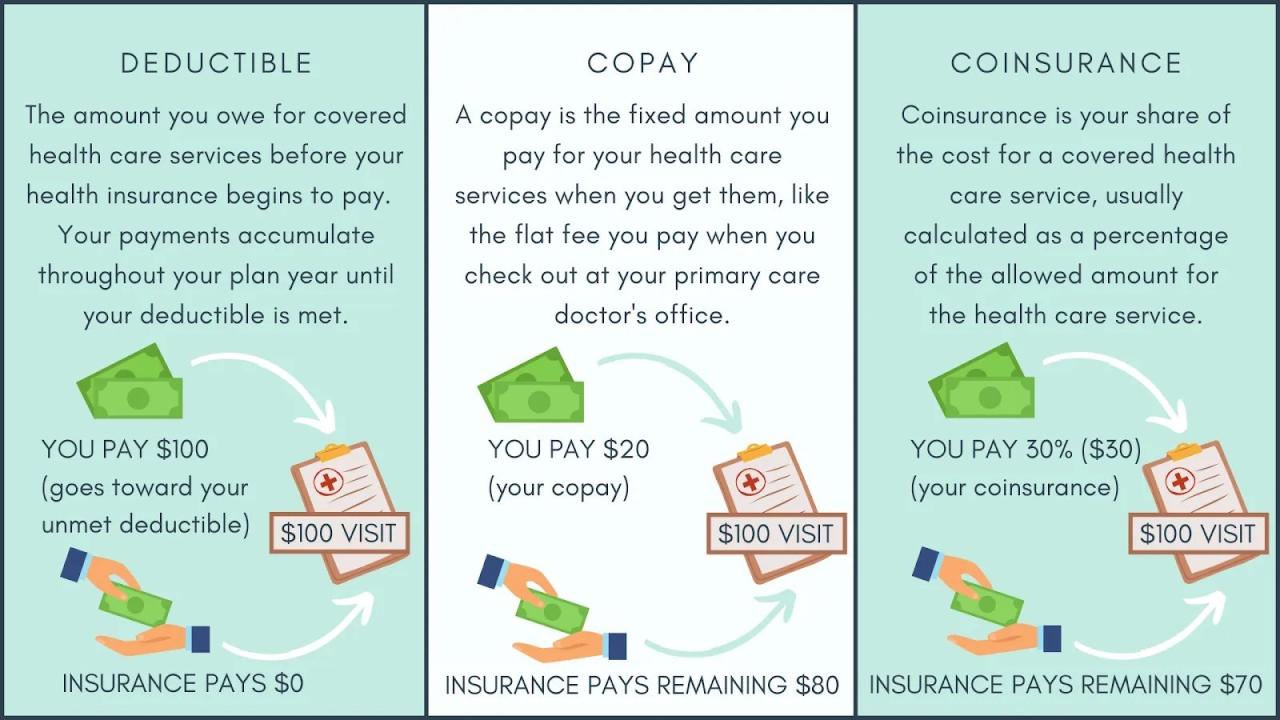
In health insurance, understanding the difference between a deductible and a copay is crucial for managing out-of-pocket costs. While both aspects involve the policyholder paying a portion of their medical expenses, they operate differently in terms of when and how much is paid.When it comes to health insurance deductibles, this is the amount the policyholder must pay out of pocket before their insurance kicks in to cover the remaining costs.
Deductibles are typically an annual expense, meaning they reset each year. On the other hand, copays are fixed amounts that the policyholder pays for specific services, such as doctor visits or prescriptions, even after the deductible has been met.
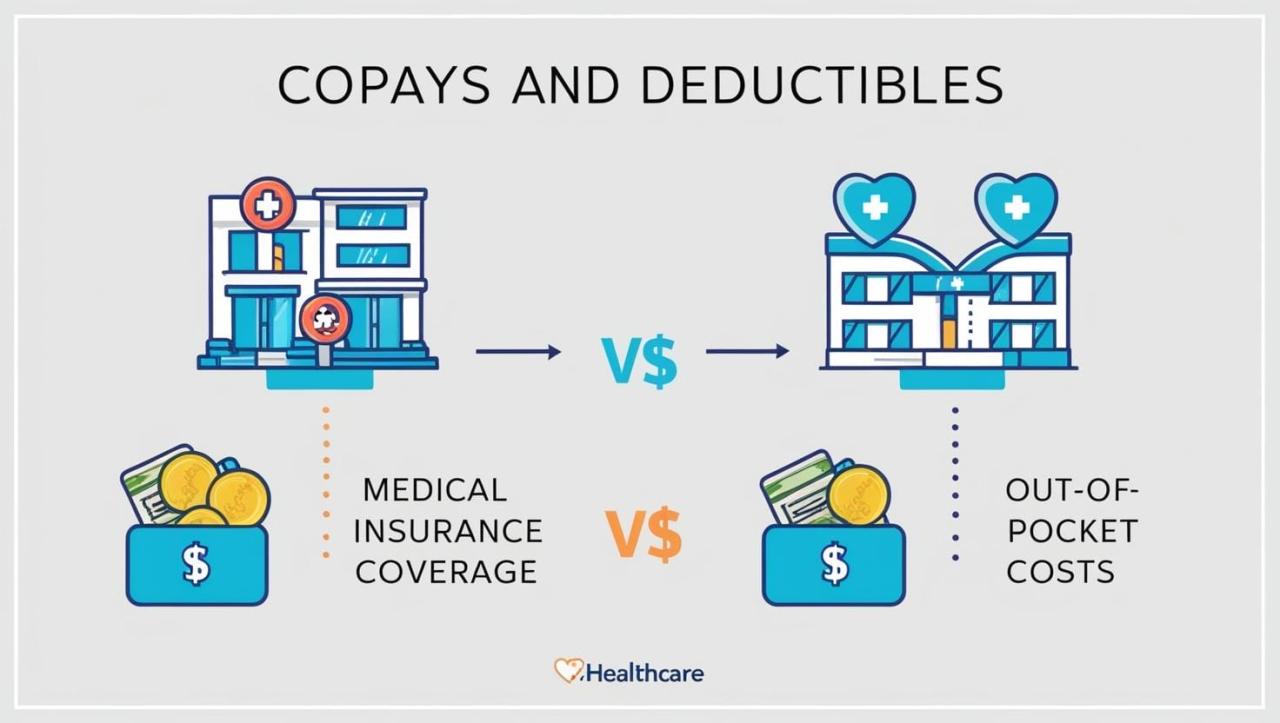
When it comes to calculating out-of-pocket costs in health insurance, understanding how deductibles and copays work is crucial. These costs directly impact how much you will have to pay for healthcare services, so it’s important to know how to manage them effectively.To determine your total out-of-pocket expenses, you need to consider both deductibles and copays.
Deductibles are the amount you must pay before your insurance starts covering costs, while copays are fixed amounts you pay for each healthcare service or prescription. By combining these two factors, you can calculate your total out-of-pocket costs for medical care.
What is the main difference between a health insurance deductible and a copay?
The key distinction lies in how costs are distributed: deductibles are upfront amounts you pay before insurance kicks in, while copays are fixed fees for specific services.
Can I be charged a copay and a deductible for the same medical service?
Yes, it’s possible to encounter both a copay and a deductible for certain healthcare treatments, leading to dual cost responsibilities.
How do deductibles and copays affect my monthly premium?
Higher deductibles often result in lower monthly premiums, while copays typically stay consistent regardless of premium amounts.
Are there any strategies to reduce out-of-pocket healthcare costs?
Utilizing in-network providers, understanding your policy details, and exploring health savings accounts can all help in managing and minimizing out-of-pocket expenses.